

Why remove a stump?
A leftover stump is more than an eyesore. It is a trip hazard and it gets in the way of the mower. As it rots it attracts termites, carpenter ants and fungus. Some species, like cedar elm and hackberry, also keep sending up new sprouts around the stump for years. Grinding it out is the fastest and cleanest way to finish off a removal.
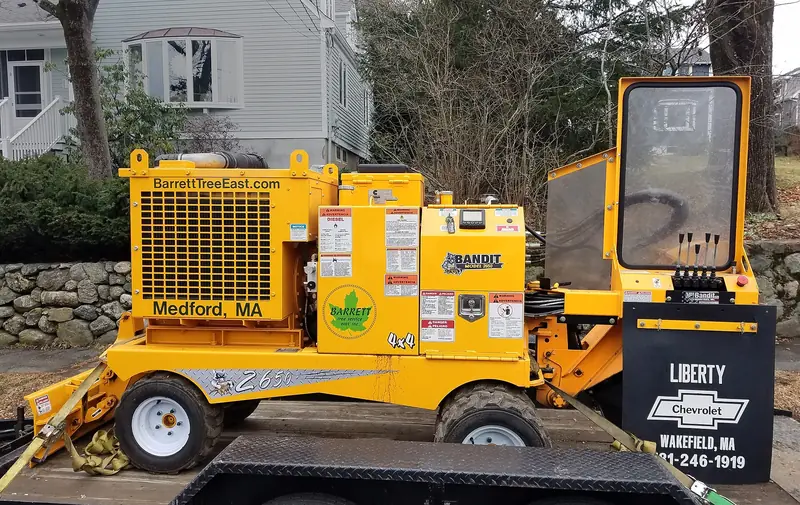
How stump grinding works
- Locate utilitiesWe check for irrigation lines, cables and utilities around the stump before we start.
- Grind below gradeA carbide-toothed wheel grinds the stump and main surface roots into chips, typically 6–12 inches below the soil.
- Your choice of clean-upWe can haul the chips away, or leave some as mulch for your beds.
- Backfill and readyThe hole is filled so it is level and ready for topsoil, sod, mulch or a new tree.
What we can handle
- Single stumps in front and back yards
- Multiple stumps after a land or lot clearing
- Large live oak and pecan stumps
- Stumps close to fences, foundations and patios
- Surface roots that lift pavers or get in the way of the mower
Wood chips use up nitrogen as they break down. If you are putting a new tree in the same spot, we suggest removing most of the chips and adding fresh soil, or planting a few feet to one side.
Fast, tidy and affordable
Most residential stumps take less than an hour to grind. We price every stump up front, and there is a discount when you add grinding to a tree removal. Clean-up is always included, so your lawn will not be buried in sawdust.
Stump Grinding FAQs
Usually 6 to 12 inches below the soil. That is enough for sod, mulch or new planting. We can go deeper if you are building over the spot.
Most species die once the stump is ground. A few, like hackberry, can send up sprouts from remaining roots for a short time. These are easy to cut back.
Yes. Our grinders fit through standard gates, and we protect your lawn on the way in and out.


